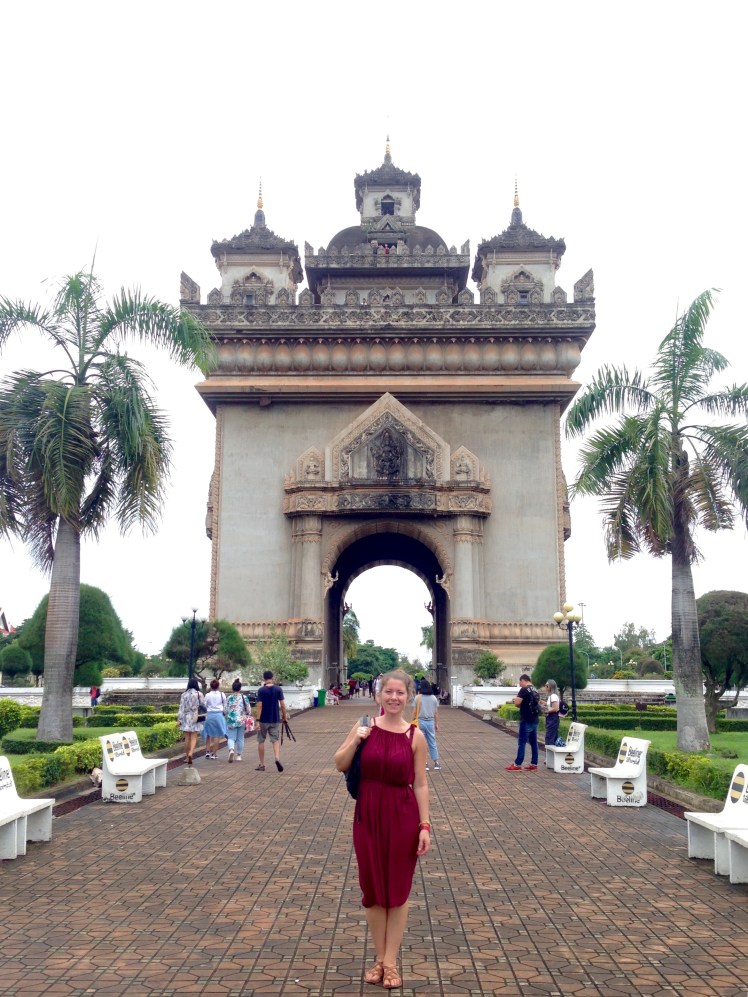
Laos is a beautiful, underrated country, with so much more to explore than the tiny bits I touched on. There’s the islands in the South (including Don Det and Don Khon), the caves in the north, the central belt, the Mekong, the mountains…. Laos is a hot bed of green landscapes and luscious farming culture; a melting pot of secret lagoons and four day hikes, a place where you can cycle and bike, kayak and climb. It’s a little untouched paradise that so often gets overlooked in favour of more popular tourist destinations.
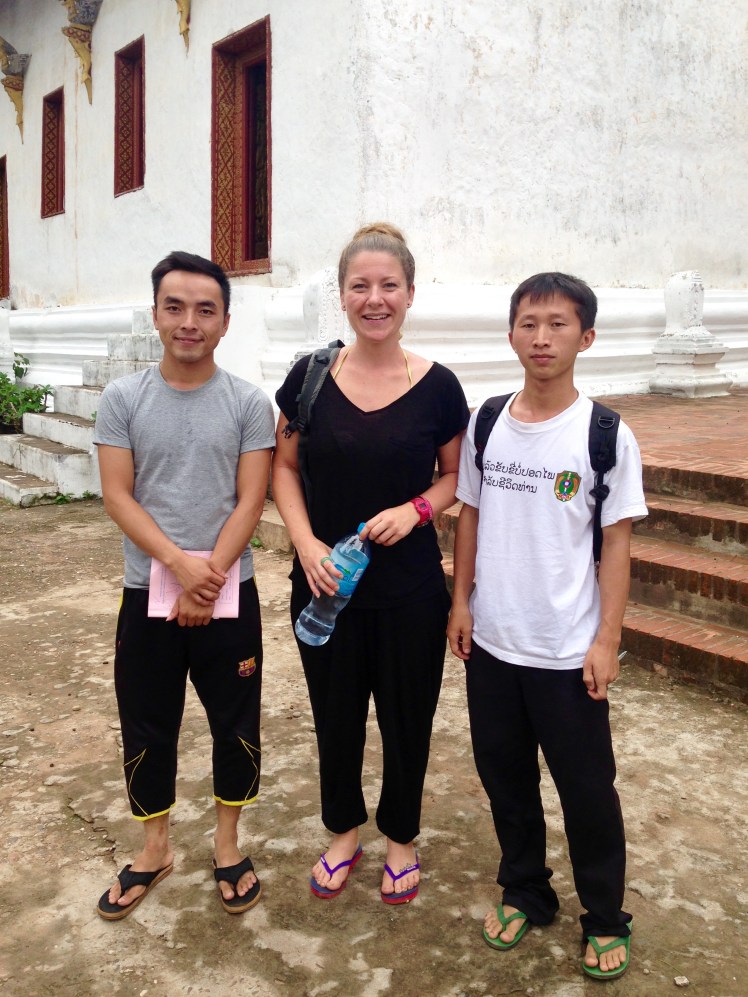
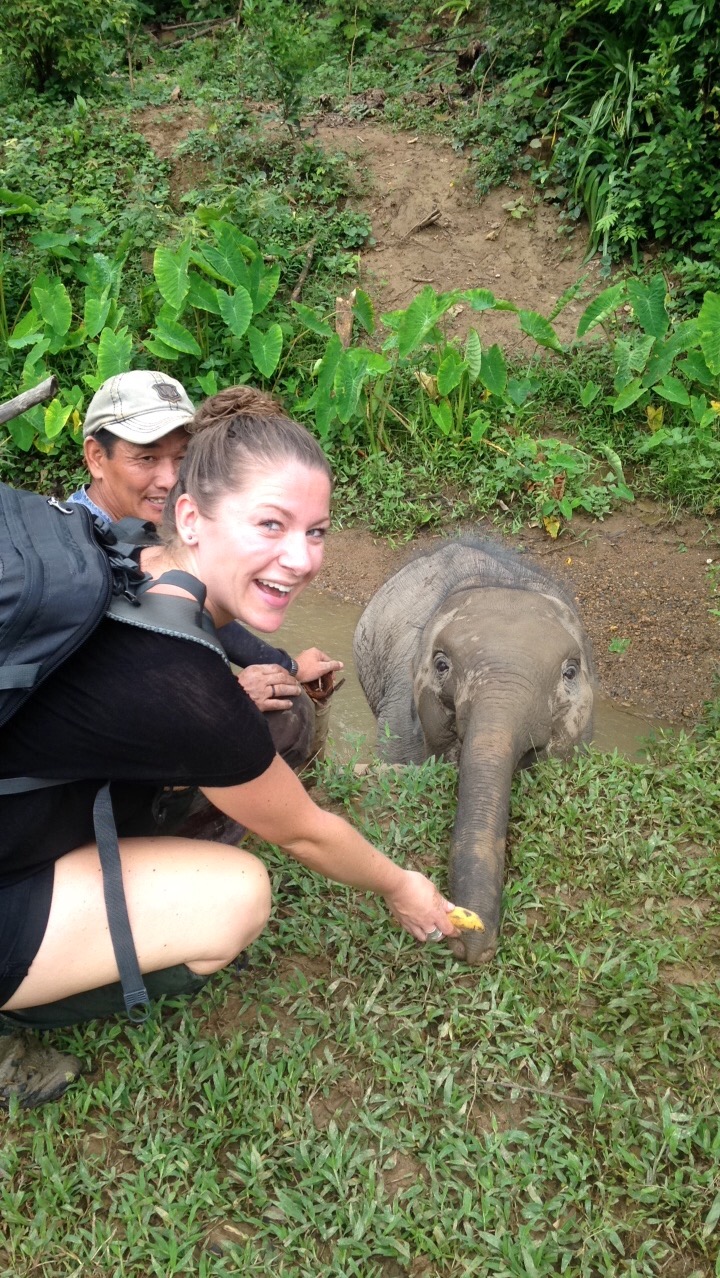
The people: For the majority, the Lao peoples are smiley and helpful. Especially in Luang Prabang – the ladies running the food stalls and taking care of the night markets always greeted you with a warm “Sabaidee” (Lao for ‘hello’), and a toothy grin. Tan, my guide on the elephant tour was beautiful – not just physically, but his personality and mild-mannerisms and his cute little laugh were adorable and this is what made him so endearing. And I felt safe in Laos. The people genuinely wanted to know about your story. And in Vientiane, in the museums and the information centre, the curators and clerks were keen to impart on you their knowledge about Laos and about its history, so that the country is not forgotten about or cast aside in favour of its bigger neighbours, Cambodia, Thailand and Vietnam.
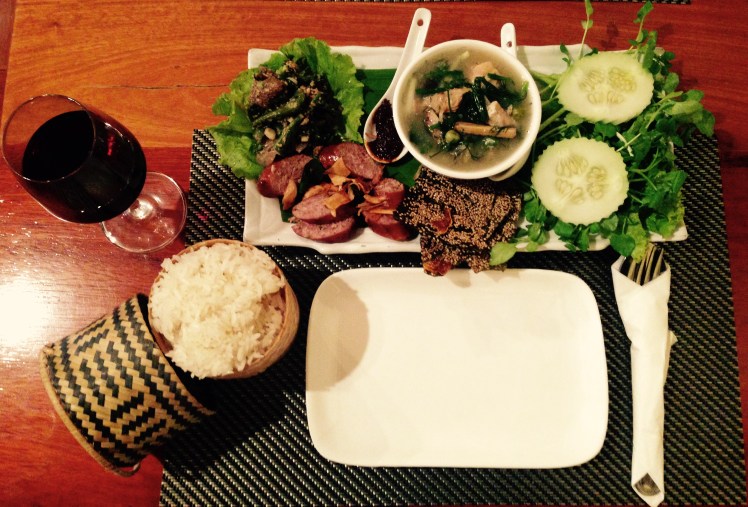
The food: Food in Laos was another thing – quite different to Vietnam yet with tiny similarities – you can still get pho and noodle soup and all the rest, but Laos also has its own cuisine. And tasty at that. Sticky rice was a favourite and I actually ended up buying myself a packet, along with some chilli paste (jeow bong), hoping it would survive the journey home. You can get all different types of bugs too – from frogs to snails, beetles to crickets – and the aromas and smells are enticingly fragrant and intriguing. Dishes that are synonymously associated with Thailand but that should be attributed to Laos can be found on every street corner. And then there’s the sweet stuff – and nowhere else but in SE Asia do they love their sweet desserts – fruit shakes laced with sugar (or without), donut type pastry things, pancakes drizzled with condensed milk. In fact, just condensed milk used in everything. But the fruit – the fruit is fresh and juicy and succulent. I really enjoyed the food in Laos but I have to say, adding extra chilli to most dishes isn’t usually necessary – my stomach has been doing somersaults now for three days straight which is not always a good thing, especially when you’re faced with drop toilets and a distinct lack of loo roll.
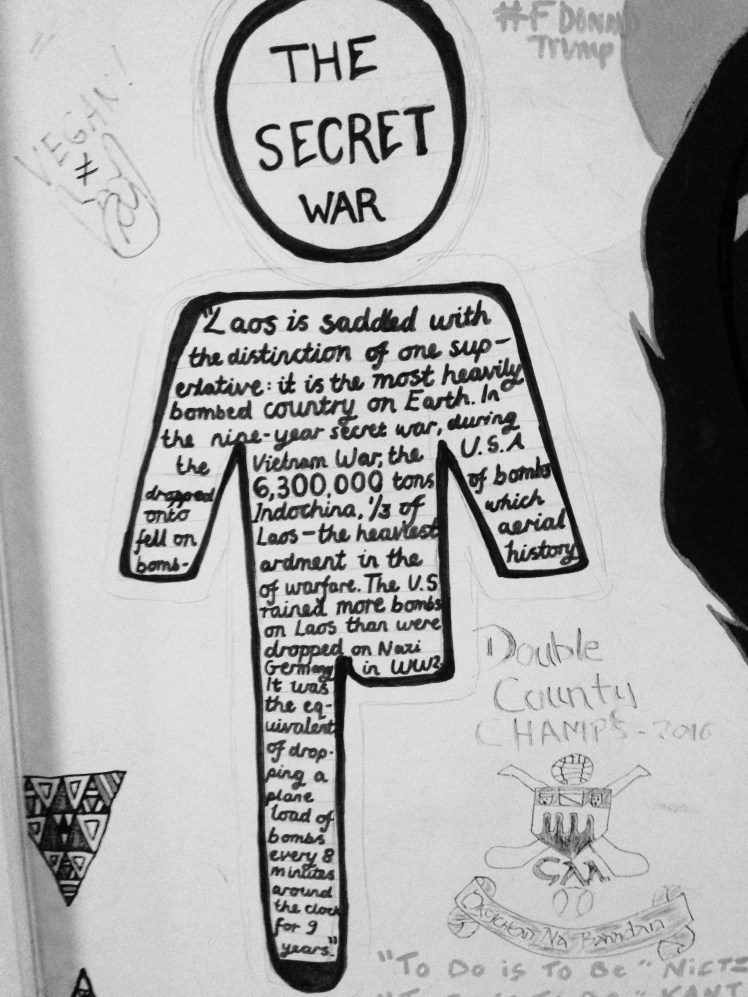
The Secret War in Laos: not many people realise that although Laos was not directly involved in the Vietnam war, indirectly, because of the US brutality, it became the most bombed country per capita in the world, ever. The countryside in Laos was decimated and destroyed in callous acts of genocidal massacre by the US government – innocent civilians killed and maimed as a horrific side effect of a war that wasn’t theirs; a war that they had nor wanted any part in. Still today unexploded cluster bombs (bomblets or UXOs) lie scattered across Laos. From 1974 to 2008 the death toll from these bomblets was more than 20,000, and in the last decade 300 casualties per year have been reported, although the number of fatalities has dropped significantly. Most of those affected are farmers going about their daily routines (farmers who are aware of the presence of UXOs but who can’t afford to buy new plots), or kids, particularly boys, finding what they think are rocks, only to be faced with violent explosions and sometimes death should they accidentally disturb the leftover killing machines. The campaign for the cluster-bomb ban emerged from this disaster; Laos very much an undeserving casualty from an unjust, violent and unprecedented US attack and invasion. Such beauty destroyed for the sake of the preservation of Western Capitalist gain.
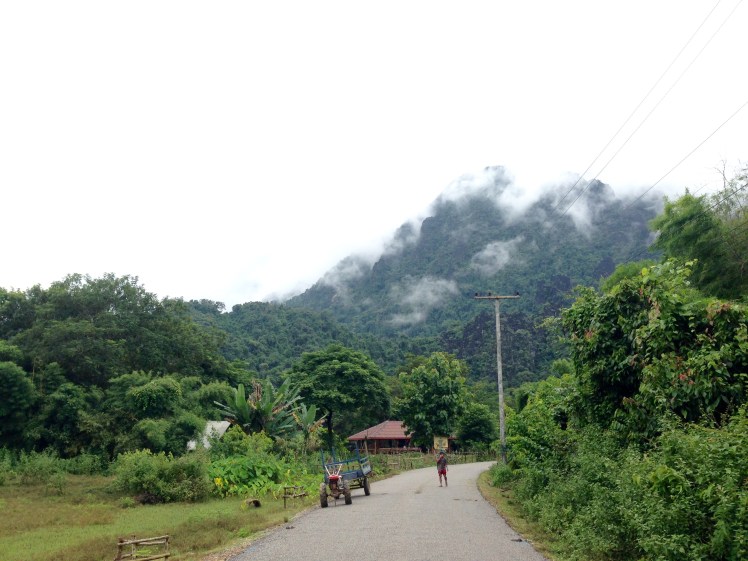
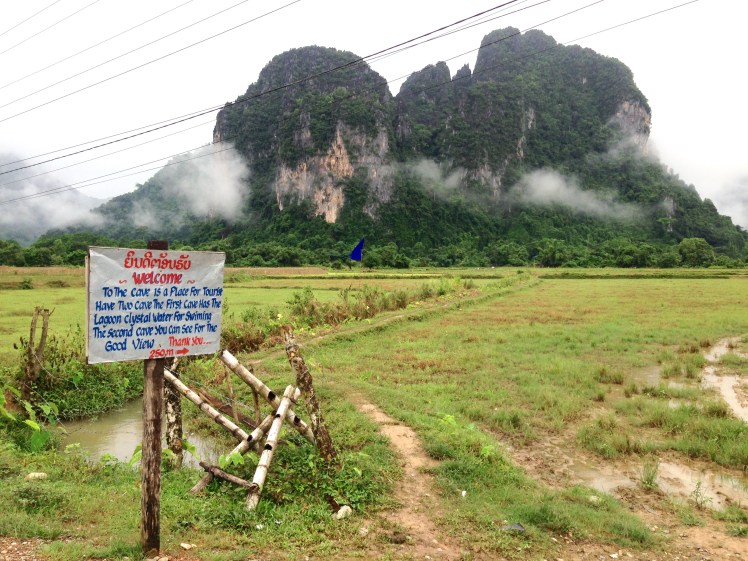
The weather: Laos is hot, and humid, and in wet season it rains. A lot. But with the wet come spells of dry, resulting in an astonishing juxtaposition on the landscape – it allows for the greenness to sprout and flourish and the crops to grow in abundance; creating a stunning backdrop of natural beauty.
The roads: as with much of South East Asia, the roads in Laos are extremely bumpy. While some of the major roads in the cities are ok, it’s the cracked cement, the pot holes, the hills, the hidden crevices and the uneven cambers that make getting from A to B a long process, and it’s these discrepancies that also cause accidents; place the roads of Laos into the UK or USA and you’d have what I like to call a ‘no win no fee compensation lawyer’s sticky wet dream’!
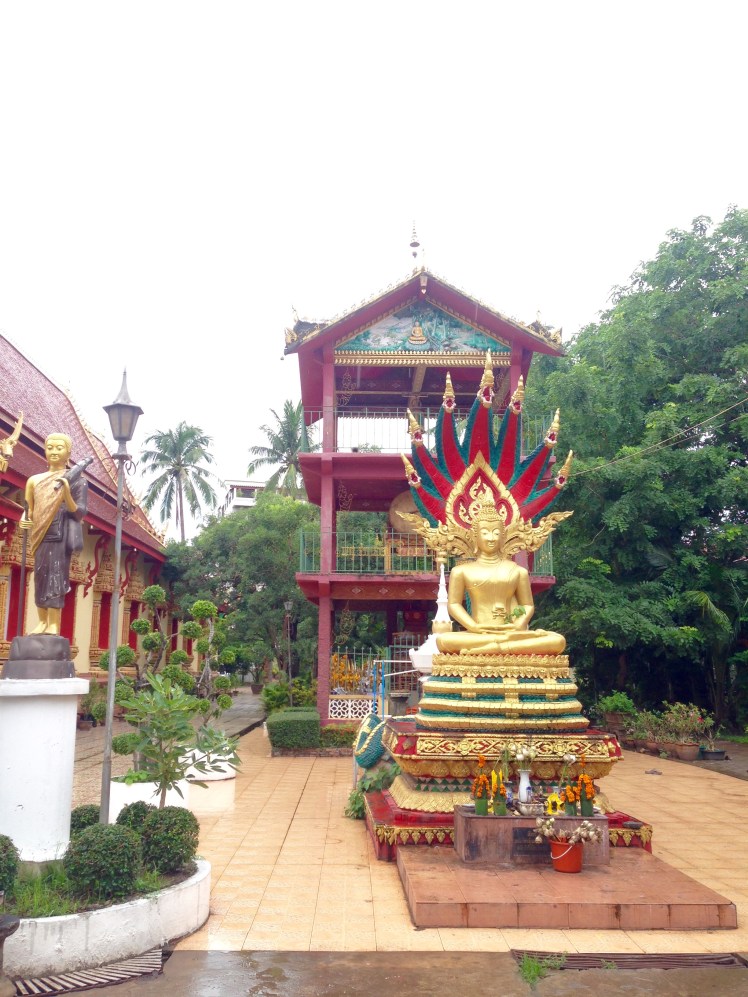
The temples: What can I possibly say about the temples that I haven’t already in previous blog posts? Well, for a start, they’re everywhere, and they’re imposing, but not in an ugly or bad way. Areas that may seem run down or weathered, areas that could be classed as eye-sores, are brightened and cheered-up by the positioning of huge gold and red temples – usually smack bang in the middle of a street where you wouldn’t expect there to be anything but a cement mixing graveyard of rubble. And they’re gorgeous: grand and ornate, detailed and precious. Laos is abundant in Wats and Temples and I could never get sick of the sight of them.
Laos, for the record, was unexpectedly enjoyable; even Vang Vieng (after I got out of the city) had its unmistakeable pros; I would love to visit this magnificent country again, not only to further my exploration and culture immersion, and not only to partake in some outdoor pursuits in the caves, rivers and lagoons; and not only to marvel at the wildlife; but to contribute to the economic growth and sustainability too; giving what I could, and taking nothing more than memories of a green and pleasant land.
 Chasing Amy-Lou