Vientiane, Laos:

My last full day in Laos was spent getting some cultural internalisation. And what I really mean by that, is taking photos of a shit tonne of Buddahs, visiting a museum, and drinking Beer Lao with an old friend.
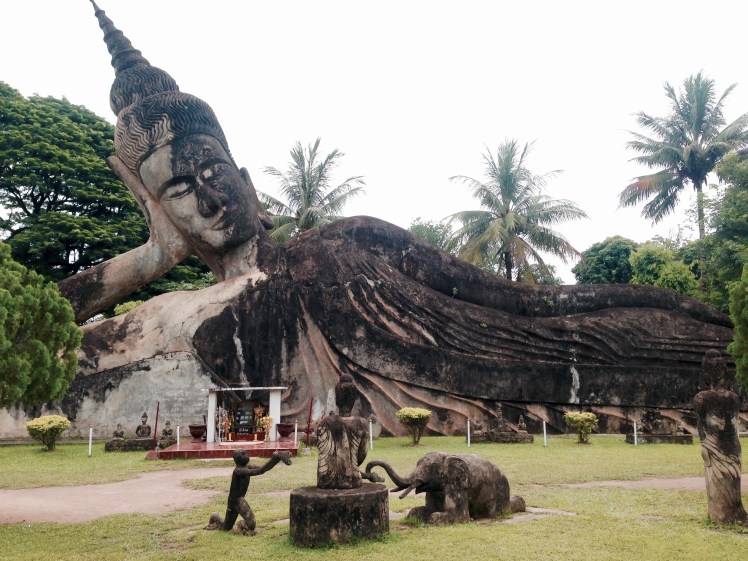
The day started well – the sun was shining, I had a spring in my step, and I had a plan of action. First up – Buddha Park – built by a rogue monk in an attempt to reconsolidate the Buddhist and Hindu faiths into his own brand of mysticism through a collection of sculptures depicting deities and scenes from both religions, this small park, situated about 25kms outside of Vientiane, along the Mekong River and just over the Friendship Bridge that connects Laos to Thailand, attracts hundreds of visitors every day and is perhaps one of the most bizarre places to visit in Vientiane.
Most hostels offer a 70,000 Kip round trip to the park, complete (I think) with guide. In the grand scheme of things 70,000 Kip is not a lot, it maybe amounts to around AUD 12 or GBP 8. However, being the thrifty miser that I am, I found a cheaper and more authentic way of getting to the park. I decided to take the bus – websites like Travel Fish, Lonely Planet and Trip Advisor give really good tips about how to access sites and cultural heritage places on the cheap – so when I read about this big green air-conditioned number 14 bus from the central bus station that would take me to Buddha Park and would only cost me 12,000 Kip for a round ticket, I jumped at the chance. And the best thing about it? I got to ride with local people – shopping bags, groceries, tobacco chewers, kids and all.

Considering the entrance fee to Buddha Park is only 5,000 Kip, the bus tickets a total of 12,000, and the fact you don’t really need a guide as you can read everything you need to about the park on the web, made me wonder that had I taken the trip organised by my hostel, where exactly the extra 53,000 Kip was going? Straight in the back pockets of the organisers, I was guessing. So I was glad I’d saved myself some cash by being a bus wanker and slumming it with the proles, it meant more money for alcohol, and that can never be a bad thing.
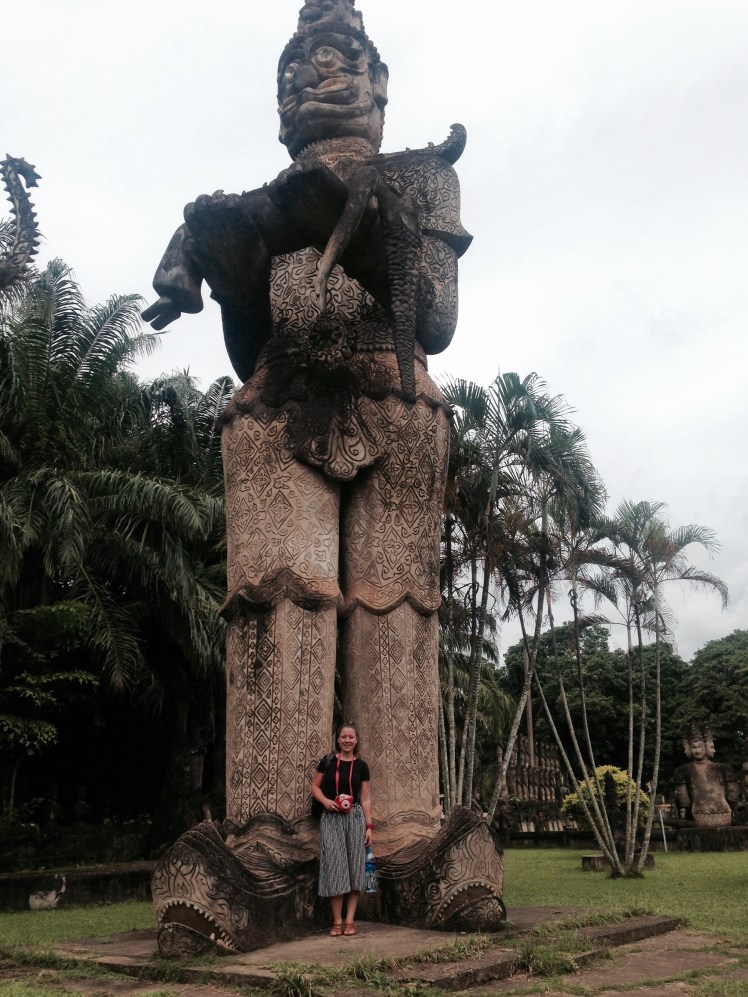
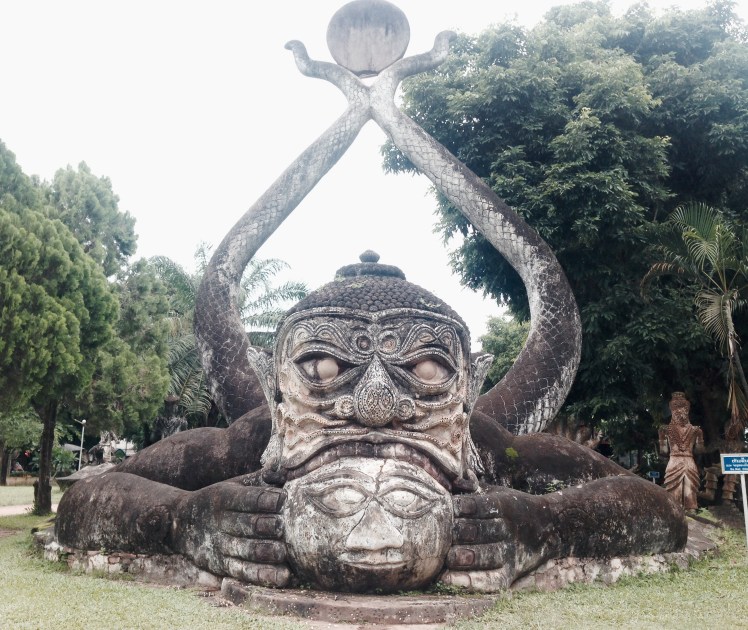
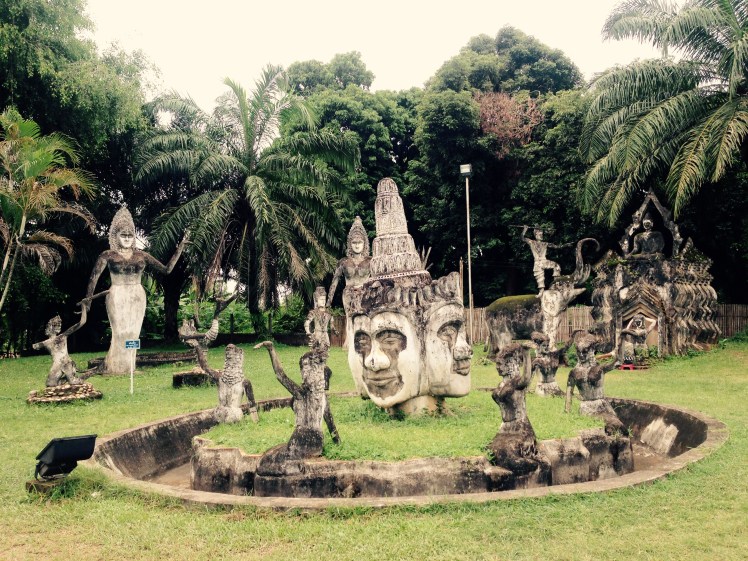
Buddha Park is fascinating. But fascinating in a really underwhelmingly fantastic way. The statues are very strange. Impressive, but strange. Some small, some tall, some you can climb on, some you can climb into. The depiction of Buddha and the Gods almost comical and in a different form to what we are usually presented with. It was amazing. I spent a good hour wandering from weathered concrete statue to weathered concrete statue just marvelling at the intricate detail and the expressions on the carved faces. There were hundreds of the things, and it seemed they were set out in a non-uniformed kind of way with no pattern to their positioning. It was a refreshing change from the blinding red and gold temples I’d bore witness to yesterday.

Back in the city I trundled through what seemed to be a rather affluent area of Vientiane, finding boutique bakeries and out of my budget restaurants, all with quirky facades and magazine-style interiors. Entering a place called Boat I was greeted with hotel style etiquette, and upon ordering the cheapest thing from the menu – noodle soup with pork – was presented with a small bottle of water and a wet towel. Whether my disheveled sweaty appearance was the reason they’d offered me two forms of hydration I’ll never know, but I appreciated the freebies anyway.
My belly fed and watered I set off in the direction of the COPE Museum where I was to exercise my brain by soaking up some information on Laos and their accidental involvement in the Vietnam War; I was also meeting Chris there, an old friend from Australia, of which I was super stoked about.
Between the years of 1955 and 1975 Vietnam was attacked by the US. Ferociously and viciously. However, from 1964 to 1973 the US dropped more than two million tons of ordnance on Laos during 580,000 bombing missions. This equated to Laos being bombed every 8 minutes, 24 hours a day, for 9 years straight! The Vietminh armies in the north would often use Laos as a safe passage in order to get from Hanoi down to Ho Chi Minh in the south. When the US army got wind of their movements they essentially decided to bomb the shit out of little old Laos as a way of attempting to eradicate the Vietnamese militia and stop them reaching Ho Chi Minh.
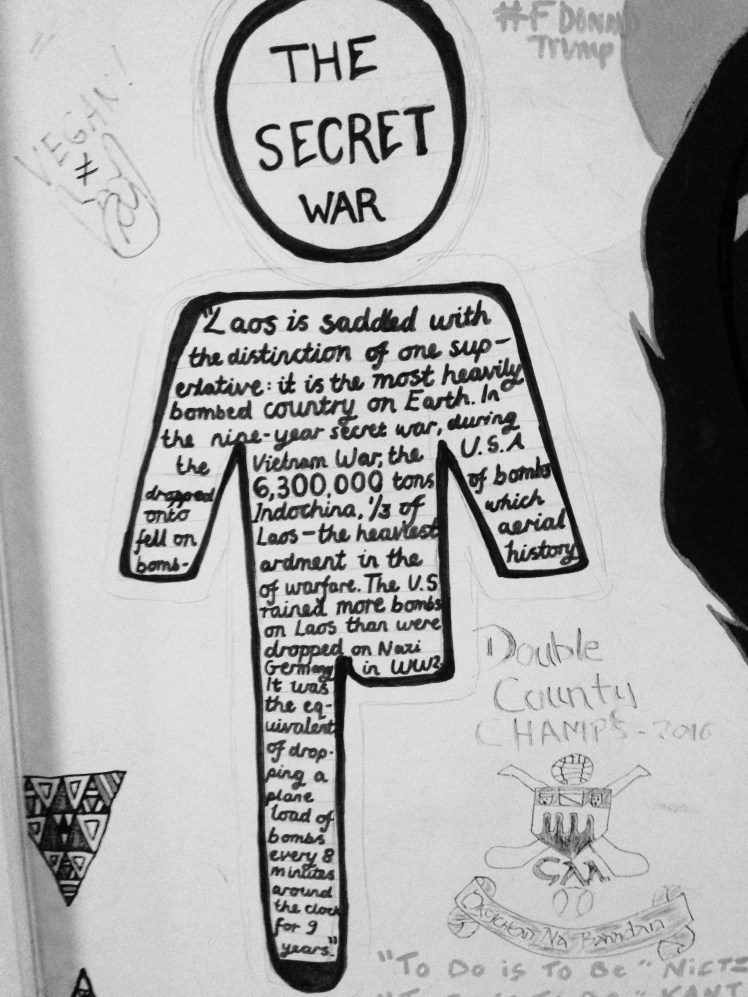
Laos was not involved in the Vietnam war. It never intended to be involved in the Vietnam war. But by default, the country subsequently became the most bombed country, per capita, in history, even more so than Iraq and Afghanistan today. Over 270 million cluster bombs were dropped on Laos, destroying their countryside and killing and maiming thousands of innocent civilians, mainly farmers and their families. It was a massacre of unjust proportions. Up to 80 million of those bombs did not detonate, and today, nearly 40 years on, less than 1% of all these munitions have been destroyed.
In the wake of the war, Laos was left with a population of disabled and dismembered citizens – many with limbs missing, many blind, and many without any form of rehabilitation, aid, or money to cure the pain and torture. This is where COPE came in.
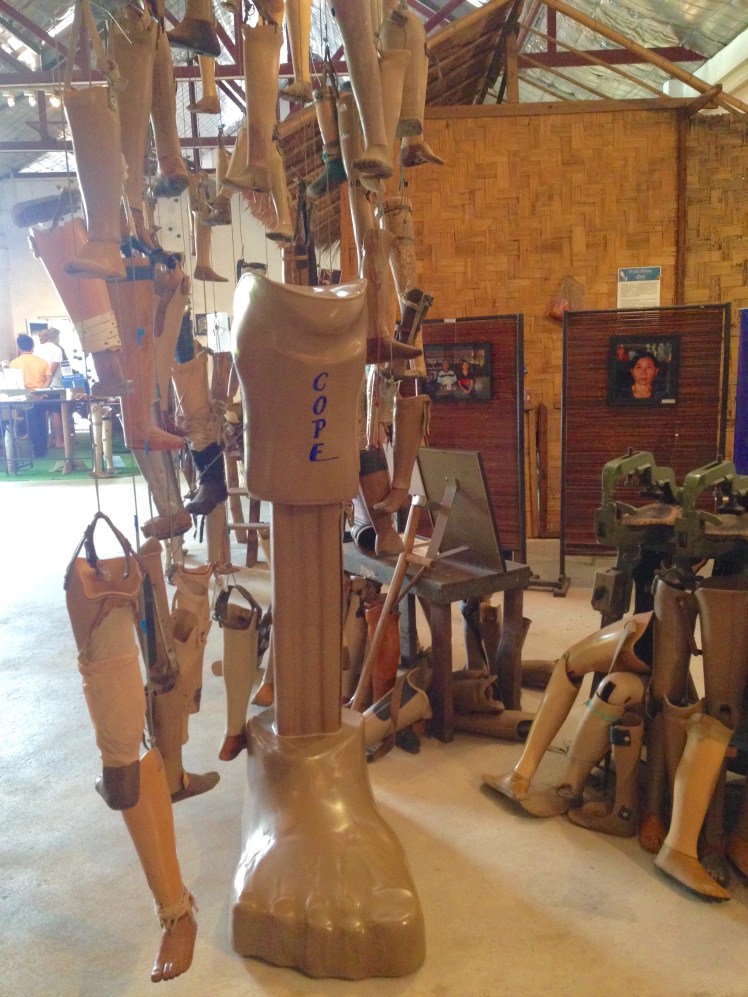
The COPE Museum or Visitor Centre is a tiny little place situated at the back of the Centre for Medical Rehabilitation. It is essentially an initiative, set up to help those who were affected by the bombings; it also now helps those who have lost limbs in road traffic accidents but in particular, it aims to raise awareness of unexploded cluster bombs or UXOs that are still very much present in Laos today. Nobody knows where these UXOs are and nobody can predict when they will explode or even if they will explode. Children and farmers are the ones usually affected by these bombs – children upon discovering them and thinking they are rocks or toys, and farmers when sewing their crops. The fallout from the explosions are life altering. For the full story visit http://www.copelaos.org or http://www.legaciesofwar.org/about-laos/secret-war-laos
The museum really struck a chord with me. And with Chris too. Just like with the War Remnants Museum in Ho Chi Minh, I left with a taste of disgust in my mouth. Disgust and disdain for a US government who could essentially have been likened to genocidal Nazis; who so brutally and bombastically tried to wipe out a race of people because they didn’t like the way they lived and didn’t like how fast communism was spreading throughout Indochina; and would stop at nothing to achieve it, even if it meant killing innocent civilians and destroying a wonderfully beautiful country in the process. That country being Laos.
The more I learned about South East Asia, its history and its people, the more I fell in love with it. So different in their culture and religion, yet so unbelievably similar in their aspirations – they just wanted to be happy and to live a long and fulfilled life. Hell, doesn’t everyone?
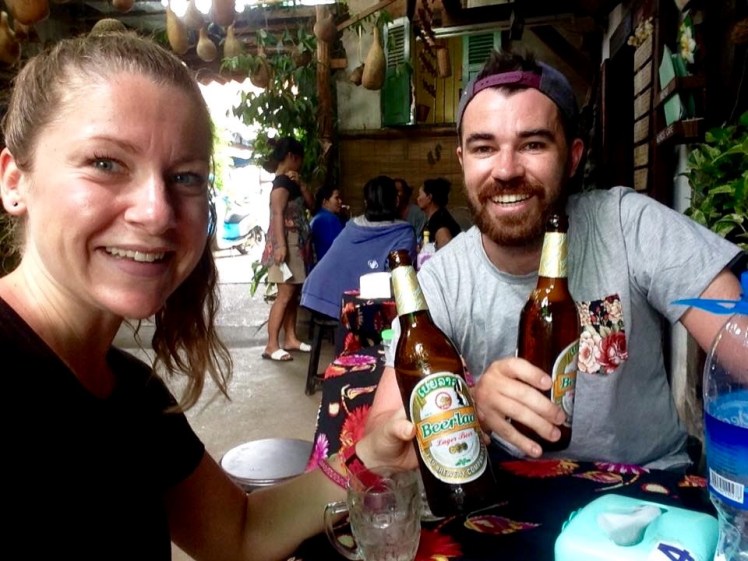
Chris and I solemnly left COPE and did the only thing we could do to wipe the sombre and sad looks from our faces – we went for a beer, and when a huge Beer Lao costs less than 2 AUD, it’s rude not to partake in extra curricular alcohol consumption. And catching up over a cheap beverage was just what we needed.
The rest of the night passed in a chilled fashion, I ate some rice in a tiny bakery, FaceTimed the nearest and dearest, then treated myself to two glasses of the best wine I’d tasted since I’d been in South East Asia. My time in Laos had been interesting; Luang Prabang and Vientiane especially, and as I made my way back to my hostel on my last night in the country, I hoped that one day, I’d be able return to this beautiful place and discover more of what Laos has to offer.
 Chasing Amy-Lou