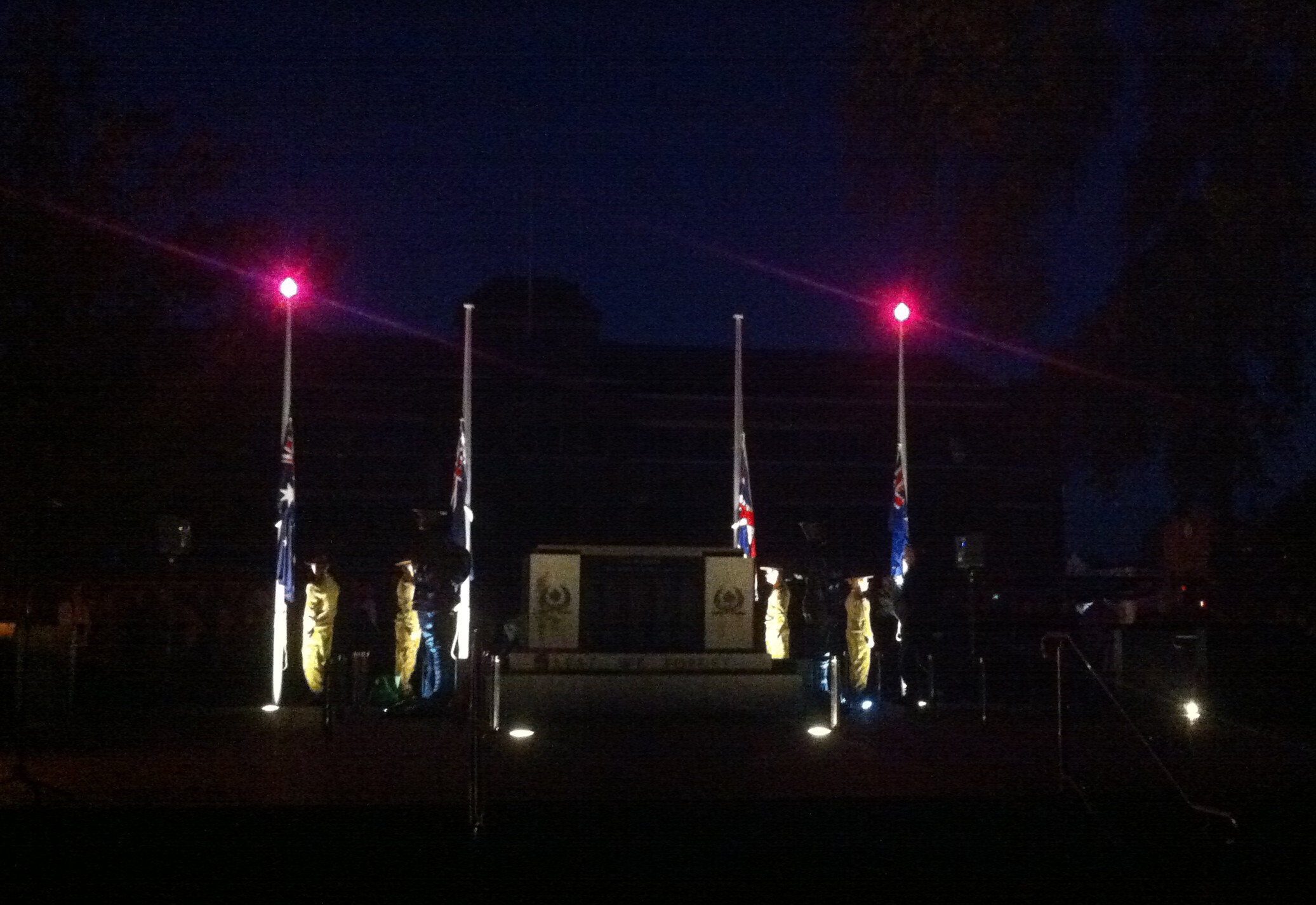
As the distant drumming sounds echoed through the frosty air; as the eerie sound of bagpipes were carried along on the settling early morning mist, I felt a chill run down my spine; and not because it was 5:30am in a freezing cold Orange, NSW; not because I was tired and drained, but because this was ANZAC Day. This was ANZAC Day 2015, and this was the Dawn Service – the ultimate time to reflect.
ANZAC Day is a day of significant commemoration for the whole of Australia and New Zealand as it observes the anniversary of the first major military action took by Australian and New Zealand forces during the First World War. What makes ANZAC Day 2015 even more poignant is that this year marks 100 years since the landing of the first ANZACS at Gallipoli.
Many of you may not know what ANZAC stands for (Australian and New Zealand Army Corps). Many of you may have heard of the name and the day but may just think it’s another Aussie excuse for a public holiday celebration; a day off work, a time to get drunk and have fun. It is all of these things, but it is also so much more.
“On the 25th of April 1915, Australian and New Zealand soldiers formed part of the allied expedition that set out to capture the Gallipoli peninsula. These became known as Anzacs and the pride they took in that name continues to this day.”
Apart from Armed Forces Day which is only a recent celebration anyway (beginning in 2006), I struggle to think of any public holiday in the UK that even comes close to the magnitude of ANZAC Day. Old and young, black and white; people from every religion and from every social background turn out for and take some part in the mass commemoration.

Yes, there is a lot of drink involved and yes people do throw parties and play two-up (a traditional Australian gambling game: http://en.wikipedia.org/wiki/Two-up) but ask any Australian, no matter where you happen to be, and they’ll be able to tell you what is so significant about this day and why it should be remembered. There’s a sense of pride when they speak. A sense of respect. There’s an awareness from even the youngest of children about how their relatives fought and died for their country. There’s also a great feeling of empathy and understanding when you listen to people speak about the terrible conditions those soldiers of the ANZAC had to endure.
ANZAC Day in the 21st Century isn’t solely about remembering those who lost their lives in WW1 though. It is about Australians who have served, fought, and lost their lives in the many Wars that have followed, and it is about paying respect to those that still serve in the forces today.
So why the Dawn Service? And why was I there?
Dawn Services are held nationally each year on ANZAC Day to represent the original time of the landings at Gallipoli. As this was my first ANZAC Day in Australia, and possibly my only ANZAC Day to be spent in Australia I thought it only right to attend a formal ceremony, to immerse myself in the traditions of the people I was now living amongst. I also wanted to witness the pride, the respect and the coming together of communities. I wanted to fit in and I wanted to see how and if the celebrations differed to those that take place in the UK.

The service began at around 5:30am (…dawn…naturally) when a procession led by ex-servicemen and women made its way to Robertson Park on Summer Street. It was a sombre and moving affair; the record-breaking crowd silent and still as the bagpipes, bugles and drums sent a haunting chill through the atmosphere.
“During battle, the half-light of dawn was one of the most favoured times for an attack. Soldiers in defensive positions were woken in the dark before dawn, so by the time first light crept across the battlefield they were awake, alert, and manning their weapons; this is still known as the ‘stand-to’.
After the First World War, returned soldiers sought the comradeship they had felt in those quiet, peaceful moments before dawn. A dawn vigil, recalling the wartime front line practice of the dawn ‘stand-to’, became the basis of a form of commemoration in several places after the war.”
What followed was a succession of hymns and poems, speeches and songs, emphasising the fact that ANZAC Day isn’t just a date; it’s a spirit – a time to reflect. Wreaths were laid and the National Anthems sung; all the while, the sun creeping up over the hills, the sky becoming lighter, clearer.
Almost frozen to the spot, feet numb and noses running, we slowly made our way through the crowds, back to the warmth of the car; that part of the Day’s celebrations was over and we left to return home with an overwhelming feeling of gratitude and utmost respect.
What followed (although I would be in bed for this first part) and in keeping with tradition, was another parade along the main street in Orange which involved local schools and community groups; a service at 10:30am, and a similar ceremony repeated in the afternoon. Many people then continued the celebrations by attending ‘two-up’ events at pubs and Ex-Services Clubs across the region, mixing and socialising with friends, and generally having a good old-fashioned, Aussie knees-up (me included, of course).
According to statistics, the attendance at the ceremonies for this years’ ANZAC Day was the highest Orange has ever recorded. Something to be proud of? I think so. Something to live up to? Most definitely. But more importantly, ANZAC Day is something to continue, something to pass on, and something that should never be taken for granted.
Lest We Forget.
 Chasing Amy-Lou